

-
Table of Contents
- Introduction
- Alopecia and Hair Loss: One of the main reasons for taking Finasteride is to treat male pattern baldness or androgenetic alopecia. However, some people may experience hair loss as a side effect of the medication, which can be confusing and concerning. This topic could explore the differences between natural hair loss and hair loss caused by Finasteride, as well as potential solutions for managing hair loss while taking the medication
- Hormonal Imbalances: Finasteride works by inhibiting the conversion of testosterone into dihydrotestosterone (DHT), a hormone that can contribute to hair loss. However, this can also affect other hormones in the body, leading to potential side effects such as changes in libido, mood swings, and breast tenderness. This topic could delve into the potential hormonal imbalances that may occur while taking Finasteride and how to recognize and manage them
- Prostate Health: Finasteride is also used to treat enlarged prostate or benign prostatic hyperplasia (BPH). However, some of the symptoms of BPH, such as difficulty urinating and decreased urine flow, can also be side effects of Finasteride. This topic could discuss the potential confusion between BPH symptoms and Finasteride side effects, as well as ways to monitor and manage prostate health while taking the medication
- Q&A
«Conoce los posibles síntomas que pueden confundirse con los efectos de Finasteride y mantente informado para tomar decisiones saludables.»
Introduction
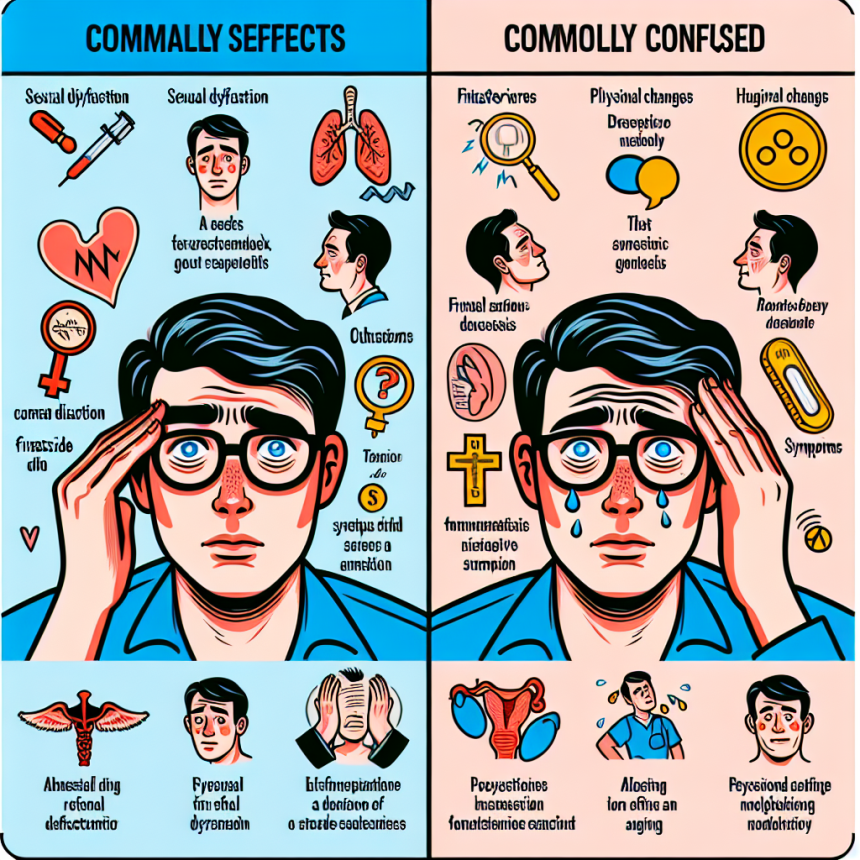
Finasteride es un medicamento utilizado para tratar la hiperplasia prostática benigna (HPB) y la pérdida de cabello en hombres. Sin embargo, algunos de sus efectos secundarios pueden ser similares a los síntomas de otras afecciones, lo que puede llevar a confusión en su diagnóstico. Es importante conocer qué síntomas pueden confundirse con los efectos de Finasteride para poder identificarlos adecuadamente y recibir el tratamiento adecuado. En este artículo, exploraremos algunas de las afecciones que pueden presentar síntomas similares a los efectos de Finasteride.
Alopecia and Hair Loss: One of the main reasons for taking Finasteride is to treat male pattern baldness or androgenetic alopecia. However, some people may experience hair loss as a side effect of the medication, which can be confusing and concerning. This topic could explore the differences between natural hair loss and hair loss caused by Finasteride, as well as potential solutions for managing hair loss while taking the medication
Finasteride is a medication commonly used to treat male pattern baldness or androgenetic alopecia. It works by blocking the conversion of testosterone to dihydrotestosterone (DHT), a hormone that is responsible for hair loss in men. While Finasteride has been proven to be effective in treating hair loss, it can also cause some side effects, including hair loss. This can be confusing for those who are taking the medication to combat hair loss. In this article, we will explore the symptoms that can be mistaken for Finasteride side effects and potential solutions for managing hair loss while taking the medication.
One of the main reasons for taking Finasteride is to treat male pattern baldness or androgenetic alopecia. This condition is characterized by a receding hairline and thinning of hair on the crown of the head. It is a common condition that affects millions of men worldwide. Finasteride has been proven to be effective in slowing down hair loss and promoting hair regrowth in men with this condition. However, some people may experience hair loss as a side effect of the medication, which can be confusing and concerning.
Hair loss is a natural process that occurs in both men and women. On average, we lose about 50-100 hairs per day. This is a normal part of the hair growth cycle, and these hairs are replaced by new ones. However, when the rate of hair loss exceeds the rate of hair growth, it can lead to noticeable thinning of hair and even baldness. This is where Finasteride comes in, as it helps to slow down the rate of hair loss and promote hair regrowth.
So, how can you tell if your hair loss is a natural process or a side effect of Finasteride? One way to distinguish between the two is by looking at the pattern of hair loss. Finasteride-induced hair loss usually occurs in a diffuse pattern, meaning it affects the entire scalp rather than just specific areas. On the other hand, natural hair loss tends to follow a more defined pattern, such as a receding hairline or thinning on the crown of the head.
Another symptom that can be mistaken for a Finasteride side effect is an itchy scalp. While some people may experience scalp irritation as a side effect of the medication, it is also a common symptom of natural hair loss. This is because as hair follicles shrink and hair becomes thinner, it can cause the scalp to become dry and itchy. Therefore, it is important to pay attention to the pattern of hair loss and any other accompanying symptoms to determine the cause of your hair loss.
If you are experiencing hair loss as a side effect of Finasteride, there are some solutions that can help manage it. One option is to switch to a lower dose of the medication. This can help to reduce the side effects while still providing the desired benefits. Another option is to use topical treatments, such as minoxidil, to promote hair growth. These treatments can be used in conjunction with Finasteride to help manage hair loss.
In conclusion, while Finasteride is an effective medication for treating male pattern baldness, it can also cause hair loss as a side effect. It is important to pay attention to the pattern of hair loss and any accompanying symptoms to determine the cause. If you are experiencing hair loss as a side effect of Finasteride, there are solutions available to help manage it. Consult with your doctor to find the best course of action for your individual situation. Remember, hair loss is a natural process, and with the right treatment, it can be managed effectively.
Hormonal Imbalances: Finasteride works by inhibiting the conversion of testosterone into dihydrotestosterone (DHT), a hormone that can contribute to hair loss. However, this can also affect other hormones in the body, leading to potential side effects such as changes in libido, mood swings, and breast tenderness. This topic could delve into the potential hormonal imbalances that may occur while taking Finasteride and how to recognize and manage them
Finasteride is a commonly prescribed medication for the treatment of male pattern baldness. It works by inhibiting the conversion of testosterone into dihydrotestosterone (DHT), a hormone that can contribute to hair loss. While this medication has been proven to be effective in treating hair loss, it is important to be aware of potential side effects that may occur, particularly those related to hormonal imbalances.
One of the most common side effects of Finasteride is changes in libido. This can manifest as a decrease in sexual desire or difficulty achieving and maintaining an erection. This is due to the fact that Finasteride affects the levels of testosterone in the body, which is a key hormone in regulating sexual function. While this side effect may be concerning, it is important to note that it is usually temporary and will resolve once the medication is discontinued.
Another potential side effect of Finasteride is mood swings. This can include feelings of irritability, anxiety, and depression. These changes in mood may be attributed to the hormonal imbalances caused by Finasteride. Testosterone plays a role in regulating mood and emotions, and any disruption in its levels can lead to these changes. It is important to monitor your mood while taking Finasteride and speak to your doctor if you experience any significant changes.
Breast tenderness is another side effect that may occur while taking Finasteride. This is due to the fact that Finasteride can affect the levels of estrogen in the body. Estrogen is a hormone that is responsible for breast development and maintenance. When there is an imbalance in estrogen levels, it can lead to breast tenderness or enlargement in men. If you experience any breast tenderness or changes in breast size while taking Finasteride, it is important to consult with your doctor.
It is also important to note that Finasteride can affect other hormones in the body, not just testosterone and estrogen. This can lead to a variety of symptoms that may be confused with the side effects of Finasteride. For example, changes in thyroid hormones can cause fatigue, weight gain, and hair loss, which may be mistaken for the effects of Finasteride. It is important to discuss any new symptoms with your doctor to determine the underlying cause and appropriate treatment.
In addition to hormonal imbalances, Finasteride may also affect other bodily functions. For example, it can cause gastrointestinal issues such as nausea, diarrhea, and abdominal pain. These symptoms may be due to the body’s reaction to the medication or changes in hormone levels. It is important to stay hydrated and speak to your doctor if these symptoms persist.
If you are experiencing any of these symptoms while taking Finasteride, it is important to speak to your doctor. They may recommend adjusting the dosage or switching to a different medication. It is also important to note that these side effects are not experienced by everyone and may vary from person to person. It is essential to monitor your body’s response to the medication and communicate any concerns with your doctor.
In conclusion, while Finasteride is an effective medication for treating hair loss, it is important to be aware of potential side effects, particularly those related to hormonal imbalances. Changes in libido, mood swings, breast tenderness, and other symptoms may occur while taking Finasteride, but they are usually temporary and can be managed with the help of a healthcare professional. It is important to monitor your body’s response to the medication and communicate any concerns with your doctor to ensure the best possible outcome.
Prostate Health: Finasteride is also used to treat enlarged prostate or benign prostatic hyperplasia (BPH). However, some of the symptoms of BPH, such as difficulty urinating and decreased urine flow, can also be side effects of Finasteride. This topic could discuss the potential confusion between BPH symptoms and Finasteride side effects, as well as ways to monitor and manage prostate health while taking the medication
Finasteride is a medication commonly used to treat male pattern baldness, but it also has another important use – treating enlarged prostate or benign prostatic hyperplasia (BPH). BPH is a condition in which the prostate gland, which is located below the bladder and surrounds the urethra, becomes enlarged. This can cause a variety of symptoms, such as difficulty urinating, decreased urine flow, and the constant urge to urinate. These symptoms can be uncomfortable and disruptive to daily life, and that is why many men turn to Finasteride for relief.
However, it is important to note that some of the symptoms of BPH can also be side effects of Finasteride. This can lead to confusion and concern for those taking the medication. So, what are these symptoms and how can they be managed?
One of the most common symptoms of BPH is difficulty urinating. This can manifest as a weak or interrupted urine stream, straining to urinate, or feeling like the bladder is not completely empty after urination. These symptoms can also be side effects of Finasteride, as the medication works by shrinking the prostate gland, which can lead to difficulty in passing urine. This can be a cause for concern for those taking Finasteride, as they may not know whether their symptoms are due to BPH or the medication itself.
Another symptom of BPH is decreased urine flow. This can be a result of the enlarged prostate putting pressure on the urethra, making it difficult for urine to pass through. Similarly, Finasteride can also cause a decrease in urine flow as it shrinks the prostate gland. This can be a confusing symptom for those taking the medication, as they may not know whether it is a sign of BPH or a side effect of Finasteride.
In addition to these physical symptoms, BPH can also cause psychological distress. The constant urge to urinate and the fear of not being able to make it to the bathroom in time can lead to anxiety and stress. This can also be exacerbated by the side effects of Finasteride, such as decreased libido and erectile dysfunction. These side effects can further add to the confusion and concern for those taking the medication, as they may not know whether it is due to BPH or Finasteride.
So, how can one differentiate between BPH symptoms and Finasteride side effects? The key is to closely monitor your symptoms and communicate with your doctor. If you are experiencing difficulty urinating or decreased urine flow, keep track of when these symptoms occur and how severe they are. If you notice a significant change after starting Finasteride, it is important to discuss this with your doctor. They may recommend adjusting the dosage or trying a different medication.
It is also important to regularly monitor your prostate health while taking Finasteride. This can be done through regular check-ups with your doctor and getting a prostate-specific antigen (PSA) test. This test measures the level of PSA in your blood, which can be an indicator of prostate health. If your PSA levels are elevated, it could be a sign of BPH or other prostate issues, and your doctor may recommend further testing or treatment.
In conclusion, while Finasteride is an effective medication for treating BPH, it is important to be aware of the potential confusion between BPH symptoms and Finasteride side effects. By closely monitoring your symptoms and regularly communicating with your doctor, you can ensure that your prostate health is properly managed while taking this medication. Remember, your doctor is there to help you navigate any concerns or confusion you may have, so do not hesitate to reach out for guidance.
Q&A
1. ¿Qué síntomas pueden confundirse con efectos de Finasteride?
Algunos síntomas que pueden confundirse con efectos de Finasteride incluyen disminución del deseo sexual, disfunción eréctil, cambios en la textura del cabello y aumento de peso. Sin embargo, es importante consultar a un médico para determinar si estos síntomas son causados por Finasteride o por otras condiciones médicas.
2. ¿Pueden los efectos de Finasteride ser similares a los de la depresión?
Sí, algunos efectos secundarios de Finasteride, como cambios en el estado de ánimo y la libido, pueden ser similares a los síntomas de la depresión. Sin embargo, es importante tener en cuenta que no todas las personas experimentan estos efectos y que es importante hablar con un médico si se presentan cambios significativos en el estado de ánimo.
3. ¿Qué otros medicamentos pueden tener efectos similares a los de Finasteride?
Otros medicamentos que pueden tener efectos similares a los de Finasteride incluyen Dutasteride, Minoxidil y algunos medicamentos para la presión arterial alta. Es importante informar a su médico sobre todos los medicamentos que está tomando para evitar posibles interacciones y efectos secundarios.